Google core update before Black friday: How to protect sales?
A Google update days before Black Friday


Google started rolling out its November search algorithm update on Tuesday, 10 November 2026 at 19:06 CET. It is the third core update this year, after the ones in March and May. It applies to all languages and all countries. A rollout usually takes up to two weeks, so this one should end around 24 November. Black Friday follows three days later, the most important week of the year for most online retailers.
Would you like to stay up to date on the latest developments in web solutions and business digitization? Add Kabi as a preferred source on Google.
For most companies this is the worst possible moment for rankings to move. Web shops have their ads, stock and promotions ready. Service companies are handling enquiries for next year's work. If you see a drop in Google Search Console during these days, the temptation to act is strong: change titles, rewrite texts, rearrange parts of the page. In most cases that is the biggest mistake you can make. It is better to leave the site alone while the algorithm changes, and to put your energy where you do have control: into the customers you already know and already have in your CRM System.
What a core update is, and what it is not?
A core update is a regular change in how Google decides which content is most useful for each search. With this update Google said only that it is a regular update, meant to show searchers more relevant and more satisfying content from all kinds of websites. It gave no further detail.
This is an important difference from the September update, when we wrote about why traffic dropped for some sites and not for others. A spam update punishes breaches of Google's guidelines, so the drops are steep and cannot be corrected without changes to the site and its content. A core update punishes nobody. It only reorders the results. If your site moves down, that does not, as a rule, mean something is wrong with it. It means Google judged that for some searches other pages answer the question better.
Why you should not change your website this week?
During a rollout, rankings move for several days in a row. They can fall and then come back. If you change the content during this time, you will never know whether your edit or the algorithm caused the change in traffic. You lose the one thing that would help you decide later: a clean comparison.
On the websites and web shops we maintain, we have not seen major shifts in the first days of this rollout. Early stability is not the final result. Rankings can keep moving until the rollout ends.
Google advises you to wait until the rollout is finished, then wait at least one more week before you analyse anything in detail. Only then should you compare Google Search Console data with the week before the update started.
This is where it becomes complicated. If the rollout ends on 24 November and you add another week, Black Friday on 27 November falls in the middle of it. Shop traffic will look different from a normal week in any case. Comparing a November week with a December week will show the effect of the shopping season, not the effect of the algorithm. A reliable picture will only come in the first half of December.
How to watch what happens without doing harm?
You do need to watch what happens, but you must not rush into changes. We suggest four rules.
- Do not watch the whole site, but individual sections. Product categories, service pages and news articles react differently to an update. If rankings fall in only one section, you already have a useful clue about what to change.
- Compare with the same period last year. For a web shop, a comparison with Black Friday 2025 tells you far more than a comparison with October.
- Track enquiries and purchases, not only clicks. A drop in rankings for searches that have never produced a conversion does not matter for the business.
- Check how visible you are in AI answers. Google's AI summaries draw on the same sources as the classic results, so changes often show up in both. The AI report in Google Search Console helps with this.
Black Friday should not depend on Google alone
A core update is a good reminder that search traffic is not fully in your hands. You only rent your position in Google. Your own customer base belongs to you. Nobody can reshuffle it overnight, move it somewhere else, or charge you for every click.
In the web shops we have developed and maintain, around 35% of sales in Black Friday week come from existing or returning customers. More than a third of the traffic in that week therefore comes from people who already know the shop and do not arrive through search. A shop that takes most of its sales from Google is in a weaker position this week than a shop that knows its customers. This is not about who has the longer list of email addresses. It is about who knows enough about their customers to offer the right product at the right moment.
What your customer database needs to know?
An email list exported from the shop three years ago is not a customer database. A useful database holds at least four facts about every customer: what they bought, when they last bought, how often they buy, and whether they agreed to receive offers from you. Without this, everyone gets the same message, and some customers are right to ignore it.
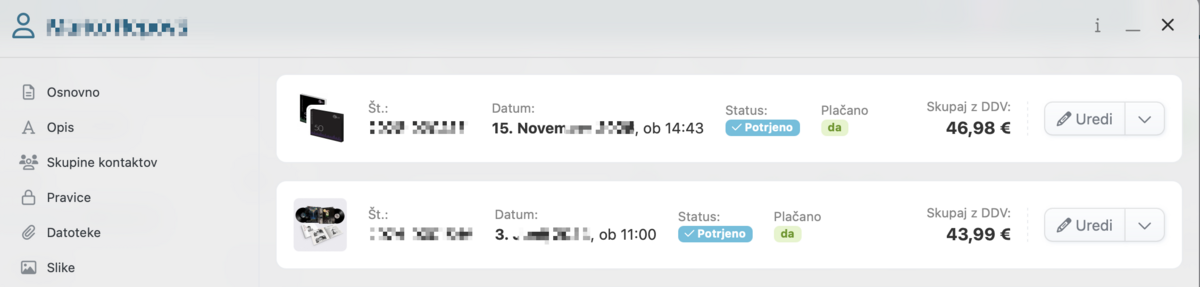
This is what a CRM system is for. It keeps purchases, enquiries, complaints and all past communication with the customer in one place. When you ask yourself before Black Friday which offer to send to whom, you do not look for the answer in three spreadsheets. The system prepares it for you.
Three groups of customers, three different messages
Before Black Friday we suggest you split your customers into at least three groups.
- Loyal customers who buy regularly. They do not need the largest discount. They need the feeling that they come first: access to the sale a day earlier, or an offer matched to what they usually buy.
- Customers who bought once or twice and never came back. Black Friday is the best chance to bring them back, because willingness to buy is at its highest of the year in that week.
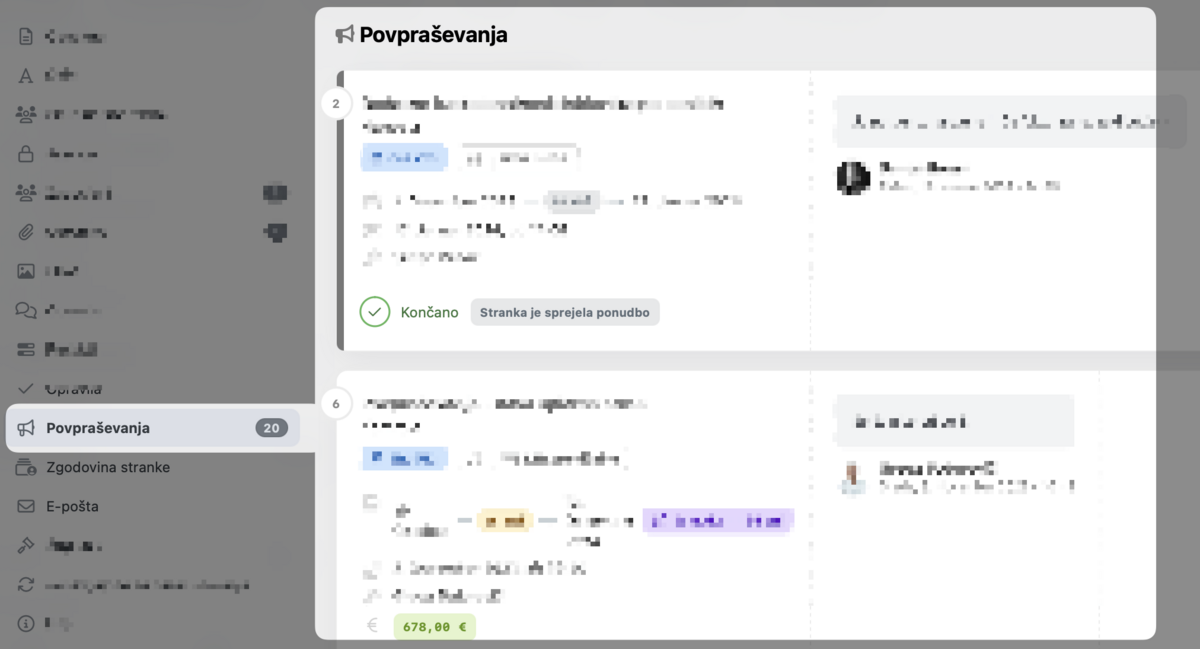
- People who sent an enquiry or left a basket without finishing the purchase. They are closest to buying, and they are the ones companies most often forget. This is where a CRM system adds the most value, because it gives every such contact a task and a deadline, so nobody is left without a reply.
From the database to the message in a few minutes
Once the groups are ready in Kabi CRM, our own CRM platform, you move them into E-Poštar Email Marketing Platform, our email tool, without exporting and importing anything, and send each group its own message. Because the two systems are connected, every purchase, every opened email and every unsubscribe is recorded against the customer. After Black Friday you therefore know not only how much you sold, but also which group responded and which did not. That data is useful in December as well, when you assess the effect of the update again. If sales held up even though traffic from Google fell, the credit goes to the channels you control yourself.
The second channel you control is advertising. If organic traffic moves during the rollout, Google Ads advertising can take over part of the searches that used to bring you free traffic. We have written separately about how much revenue a shop loses when those ads are switched off.
How we help at Kabi?
We develop websites and web shops on our own Kabi platform, so we know exactly how titles, redirects, tags and structured data are created on every page. When an update reshuffles the results, we do not have to guess what is hidden in the code.
In website optimisation we first separate algorithm movement from real problems on the site, and only then propose changes. The shops we build can easily be connected to Kabi CRM and E-Poštar. Every purchase and every enquiry is then recorded against the customer, and in the weeks that matter you have a channel that does not depend on any search engine.
Maybe you are interested
Read more